How did early contact shape Hawaii local food culture?
After first contact in 1778, the landscape of food changed forever as missionaries and whalers introduced foreign flavors and established large plantations. This shift laid the groundwork for the complex relationship between local agriculture and modern dining.
The history of food in the islands is a blend of imported traditions and changing land use. This article explores how historical shifts in agriculture and cuisine shaped the islands, while examining the legacy of plantation culture and early maritime influences.
Key takeaways: * Early contact introduced European and American cuisines alongside large-scale plantations. * Land use shifted significantly from ranching to other uses during the late 20th century. * Maritime history influenced the arrival of new goods and people via global trade routes.
How did early contact shape Hawaii local food culture?
A sailor stands on a wooden deck, watching the horizon as new ingredients arrive on a foreign vessel. Following the first contact in 1778, European and American cuisine arrived alongside missionaries and whalers.
These groups introduced their own foods and built large sugarcane plantations, which fundamentally changed the local diet.
The introduction of these crops and cooking styles created a foundation for Hawaii local food culture. As new agricultural methods took hold, the reliance on imported goods began to shape how people ate. This period marked the beginning of an era where foreign agriculture met island life.
- Introduction of foreign livestock and crops.
- Integration of new ingredients into indigenous techniques.
- Emergence of fusion flavors through cultural exchange.
How did land use changes affect Hawaii rice farming history? Hawaii local food and rice
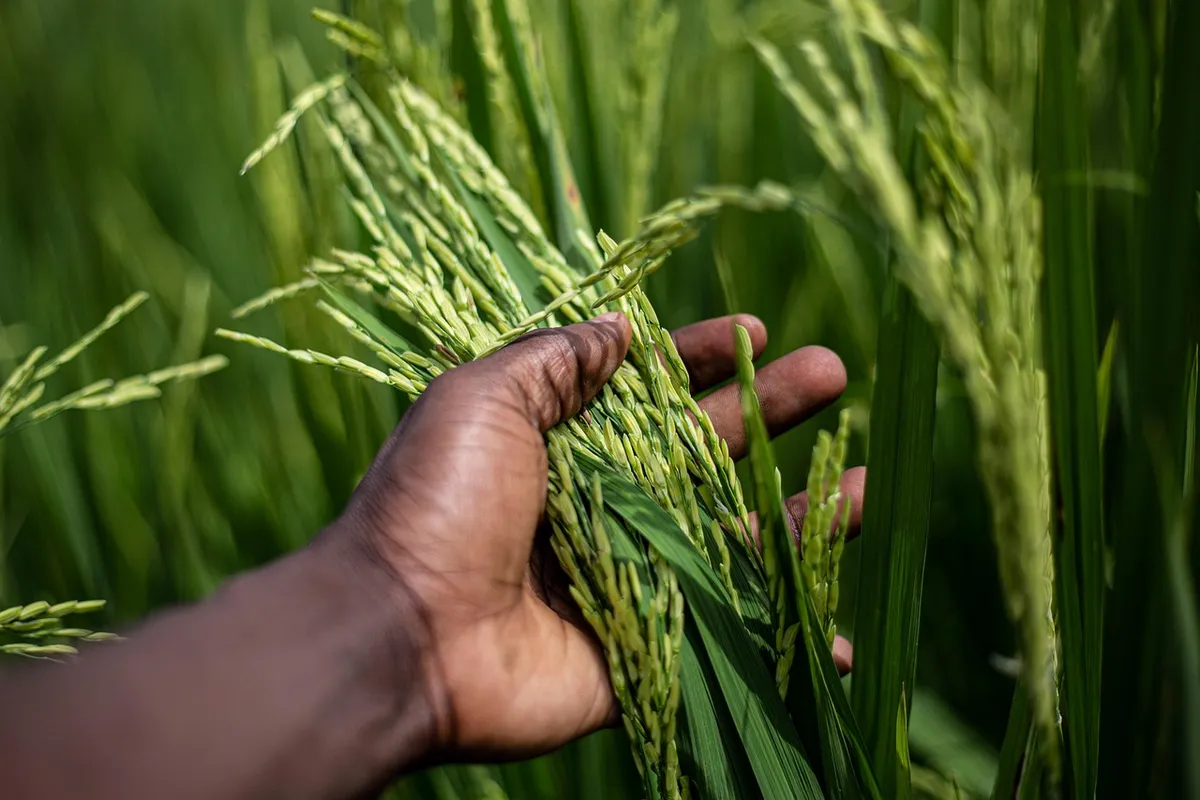
Walking through the muddy paddies at sunset, an elderly farmer feels the damp earth and reflects on the shifting Hawaii rice farming history.
A farmer looks over a vast field that once held different livestock, noting how the terrain has transformed over decades. In 1960, half of the land in Hawaii was devoted to ranching for beef export. By 1990, the number had shrunk to 25 percent.
These shifts in land allocation reflect the changing economic priorities of the islands. Such transitions often impact how traditional crops, such as rice, are integrated into the landscape.
Understanding these fluctuations is essential to understanding Hawaii rice farming history and how it evolved from earlier plantation models.
In this sequence, the second step is the most extensive.
According to World Bank, the 2024 record includes 94.7%.
How did sea travel shape our food traditions? A massive ship cuts through the Pacific waves, carrying passengers and supplies between distant ports. In early 1933, after the Lurline completed a 30,000-mile maiden voyage from New York around the Pacific Ocean, Matson established regular Honolulu service with four ships.
Regular maritime service streamlined the movement of people and goods, impacting how ingredients reached the islands. This connectivity influenced the development of traditional Hawaii meals through the steady influx of diverse goods.
The ability to maintain regular service ensured that the culinary landscape could adapt to global trade.
Where did these unique ingredients actually come from? A chef examines a bowl of rice, considering the long journey of the grain from its origin to the plate. The arrival of new cultures brought diverse ingredients that were eventually integrated into the local diet. This fusion of flavors created a unique culinary identity.

The history of the islands shows that what people eat is often a result of historical trade and land use. Exploring these connections helps explain why certain ingredients became staples. The evolution of these foodways is a direct result of the plantation era and maritime history.
What are the limitations of studying historical cuisine?
A researcher sits in a quiet library, flipping through old logs of cargo and passenger manifests. One must consider that historical records may focus on trade and industry rather than the daily lives of all residents.
According to the Sustainable Tourism Association of Hawaii, the organization was founded in 1995 as a 501(c)(3) nonprofit to nurture the development of sustainable tourism in Hawaii.
It is important to note that the official narrative of certain voyages might not reflect the true geography.
For instance, a group of islands found after 30 days of sailing west from Mexico were named the Islas del Rey, but these were later speculated to be the Caroline Islands or Marshall Islands, not Hawaii. This highlights how historical accounts can be subject to different interpretations.
The subject here is Hawaii local food and rice.
The same subject is also called Hawaii rice cultivation.
The same subject is also called Local Hawaii food culture.
This part also covers Reviving Hawaii rice crops.
This part also covers Hawaii local food recipes.
This part also covers Hawaii rice growing tips.
Reviving Hawaii rice crops
Related
- Hawaii Workation: Essential Checklist for Your Island Life
- 70% Immigrant Roots: Understanding Modern Hawaiian Cuisine
How does the concept of "first contact" relate to modern dining?
The initial arrival of foreign influences marks a pivotal moment in the development of modern Hawaiian cuisine. Following the first contact in 1778, the introduction of new foodstuffs and preparation methods began the culinary evolution. This early exchange between island life and newcomers established the complex layering found in contemporary Hawaiian dishes.
The integration of these early influences demonstrates a dynamic culinary process. The initial encounter with different cultures through the first contact set the stage for the fusion that characterizes local food today. This early blending of traditions is a direct consequence of the circumstances surrounding the first contact.
What is the significance of the transition from ranching to other uses?
The shift in land allocation from ranching to other uses reflects a broader economic reality affecting the islands. The decrease in land dedicated to beef export signifies a major adjustment to the islands' economic focus over several decades. This transition mirrors the broader changes seen in the agricultural landscape.
This change in land use demonstrates a move away from earlier plantation models. The evolving use of the land directly impacted which crops, like rice, could maintain prominence in the local diet. Such shifts illustrate the constant negotiation between tradition and modern economic pressures.




Comments 0